When to Upgrade from Manual to Machine Wrapping
For many growing businesses, manually wrapping pallets by hand is where it all begins. A roll of stretch film, a team member on the warehouse floor and a load ready for dispatch. It feels simple and cost effective.
However, what starts as a low cost solution can quickly become a significant hidden expense. Labour time increases. Film usage climbs. Inconsistencies creep in. As volumes grow, manual pallet wrapping (hand wrapping) often becomes the bottleneck that limits productivity.
At a certain point, manually wrapping pallets stops being a saving and starts costing your business in efficiency, safety and damaged goods.
So how do you know when it is time to upgrade?
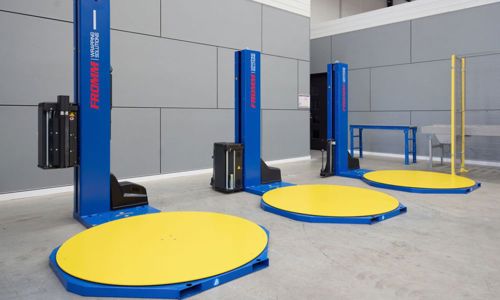
Manual vs Machine Pallet Wrapping
In simple terms, manual pallet wrapping relies entirely on physical labour. An operator walks around the pallet with a roll of stretch film and manually pulls the film tight to create tension before applying it to the load. This tension, often referred to as 'pre-stretch' activates the film's elastic properties so it can contract around the pallet and hold the load securely in place.
While hand wrapping can be effective for low volumes, it is labour intensive and highly dependent on the individual operator. Physical strength varies from person to person, and fatigue can quickly set in when wrapping multiple pallets in a day. As a result, film tension, coverage and wrap patterns can become inconsistent, increasing the risk of load movement and potential damage during transit.
By contrast, machine pallet wrapping uses a turntable or robotic system to automatically stretch and apply the film and, depending on the model, cut and secure it at the end of the cycle. This results in faster wrap times, consistent load containment and significantly reduced physical strain on staff.
The Hidden Costs of Staying Manual Too Long
Manual pallet wrapping has its place, especially for new or very low volume operations. But once volumes begin to grow, the drawbacks become more visible.
Remaining reliant on manual pallet wrapping equipment for too long can create operational inefficiencies that quietly erode profitability.
The OH&S risks
Hand wrapping requires bending, stretching, twisting and walking around pallets multiple times per load. Even if your business wraps fewer than 10 to 15 pallets per day your warehouse team is exposed to repetitive strain from stretching film, bending and stooping.
These repetitive movements increase the risk of musculoskeletal injuries, fatigue and lost productivity. An entry level machine can significantly reduce this strain while positioning your business for future growth.
Inconsistent load security
Manual wrapping depends on the individual operator. Film tension, overlap and coverage can vary from pallet to pallet.
This inconsistency can lead to poorly secured loads, shifting during transit and product damage. Even minor load movement can impact presentation and customer satisfaction. Machine wrapping can apply uniform film tension and wrap patterns every time, dramatically reducing variability.
Excessive film waste
A human operator simply cannot stretch film as effectively as a machine with either a mechanical brake or powered pre-stretch capability.
Machines can stretch the film to maximise yield, meaning you use less film per pallet. With hand wrapping, businesses often overwrap to compensate for poor tension control and ad hoc wrapping patterns, driving up material costs.
4 Signs it's Time to Switch to a Machine
If you are unsure whether the move to semi automatic pallet wrapping or a more advanced automatic pallet wrapping solution is right for you, consider the indicators below;
1. You wrap more than 10-15 pallets per day (or even less)
Once you regularly exceed 10 to 15 pallets per day, labour time and operator fatigue begin to compound. Even below this volume, if wrapping is part of your daily routine, the cumulative repetitive strain on staff may justify upgrading to a basic semi automatic pallet wrapping machine such as the FROMM FS335.
For sites without a forklift, the FROMM FS380L offers an ultra low profile turntable that can easily loaded with a pallet jack. If you are wrapping particularly heavy or irregular sized loads that may not suit a traditional turntable, an entry level robotic solution like the FROMM FR390 can provide greater flexibility, wrapping anywhere in the warehouse and using sensors to detect load sizes.
Any entry level machine reduces physical effort, improves consistency and ensures you are prepared for peak periods or business growth.
2. You are seeing high rates of transit damage
If pallets are arriving with crushed cartons, leaning loads or broken products, load containment may be the issue. Varied manual wrapping patterns can often fail to properly anchor the load to the pallet base. A machine applies repeated uniform wrap cycles (unless settings are adjusted per load) and controlled tension, helping to secure loads for transport conditions such as braking and cornering.
3. Your film costs are skyrocketing
Rising stretch film usage is often a sign that operators are compensating for poor tension by applying more film. Machines with powered pre-stretch film carriages significantly improve film efficiency, reducing overall film consumption per pallet. Semi automatic pallet wrapping machine models with pre-stretch film carriages include the FROMM FS380 and the FROMM FS2000, with the FS2000 also including automatic film attachment and end of cycle cut with FROMM's patented Æolus film delivery system. These features are also included in its robot counterpart the FR2000.
4. Bottlenecks at the dispatch dock
If trucks are waiting while pallets are wrapped, your dispatch area is operating below optimal efficiency.
Automatic pallet wrapping increases throughput and removes one of the most physically demanding tasks from your dispatch process. Instead of walking around every load with a roll of film, your team can stay focused on picking, staging and preparing orders for shipment.
Machines with more advanced features can take this even further. At the touch of a button an entire wrap cycle is completed, including film attachment followed by cutting and sealing at the end of the cycle. Whilst these systems sit at a higher investment level, they free up your operators to perform other value-adding tasks while the pallet is being wrapped, helping you get more out of both your equipment and your team. Take a look at the FROMM FS2000 or the Wulftec SMLPA200 which is designed for harsh environments.
Choosing Your Upgrade Path: Semi vs Automatic
The transition from manual to machine wrapping typically follows a clear progression.
Businesses generally move from hand wrapping to semi automatic systems first, then to automatic or fully automatic solutions as volumes increase.
The next step: semi automatic pallet wrapping
For most small to medium businesses, the logical first upgrade is semi automatic pallet wrapping.
Generally, stretch wrapping machines are regarded as semi automatic when:
- The operator positions the pallet on the turntable (or in the space in the case of robot or rotary arm machines)
- The film is attached manually
- The machine performs the wrapping cycle automatically
- The operator cuts and secures the film at the end of the cycle
This significantly reduces physical strain while improving consistency and film efficiency. It is often the most practical and cost effective first step away from manual pallet wrapping equipment.
Semi automatic pallet wrapping machines can be configured with a range of practical options, allowing you to tailor the equipment to suit your specific operational requirements.
Including;
- Automatic film attachment
- Film cutter
- Scales to weigh each load
- Ramps to load turntable machines with a pallet jack or trolley
- Extended mast for wrapping taller pallets
- Photo eye for wrapping dark products
- Low temperature kits for wrapping environments to -5°C
- Weight extension for those wrapping heavier loads with a turntable machine. Selected machines have the option to accommodate pallets weighing up to 3000 kg
The high volume solution: automatic pallet wrapping
As volumes grow further, businesses may consider automatic machines that include more advanced features. These are featured on the FROMM Automatic and Inline wrapping machines page and are designed to operate with little to no human intervention. Fully automatic pallet wrapping is generally suited to high speed, continuous production environments where integration with conveyors and other automated equipment is required.
Key Takeaways
Manual pallet wrapping is often the starting point for many businesses, but it rarely remains the most efficient solution as volumes grow.
If you are manually wrapping pallets every day, seeing transit damage, experiencing rising film costs or creating dispatch bottlenecks, it may be time to consider semi automatic pallet wrapping or automatic pallet wrapping.
Even businesses wrapping fewer than 10-15 pallets per day can benefit from upgrading, particularly to reduce repetitive strain and prepare for future growth. The right solution depends on your throughput, warehouse layout and long term operational goals.
If you are unsure which path is right for your business, speak with the team at FROMM Packaging Australia to discuss your current operation and identify the most suitable machine.
Visit our contact us to send through a website form or call 1800 940 356.
Trusted By Companies Large And Small Across Australia