How to choose the right stretch wrap
Getting stretch wrap right
While stretch wrap, stretch film and pallet wrap appear to be different terms, it's all the same thing; a plastic wrap designed to stretch when applied to the pallet (or load). When it stretches, it creates tension that holds the load tightly together.
As one of the most widely used items in warehousing and logistics, stretch wrap can be relatively inexpensive, quick to apply and effective in securing goods for transport if you choose the right kind.
At FROMM, we see a lot of businesses that treat stretch film as an afterthought. Something to buy as cheaply by the roll as possible. But its effectiveness truly depends on what you're using it for: the load you are wrapping, how it's wrapped and the conditions it travels through.
In other words, if you settle for the cheapest stretch wrap out there, you could end up spending a lot more money in the long run. Consciously choosing a quality stretch wrap can help you achieve a more stable, protected load with a lower total cost per pallet.
This guide explains how stretch wrap works and what to consider when choosing the right match for your products.
Good wrapping matters more than you think
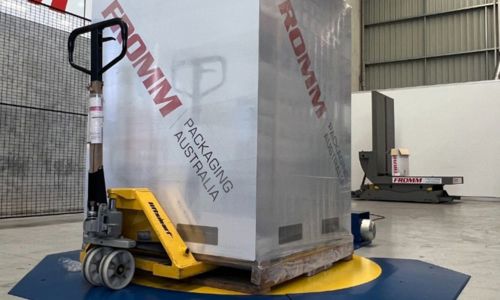
Stretch wrap plays an important role in the supply chain. Its main job is to provide a layer of protection for goods during transit, so they move safely from point A to B. A well wrapped load keeps cartons and products together, prevents load shifts, protects edges and surfaces, reduces risk of product damage and improves safety during handling.
Without the right wrap, you're likely to run into a few problems;
- Your products will arrive damaged - It's not abnormal to see heavily wrapped loads that are still unstable. This usually indicates a mismatch between the choice of wrap and the load characteristics or the securement method altogether.
- Your wrap will break or tear - Low quality film, sharp edges and incorrect tension settings can cause breakages. This slows everything down, wasting money and time.
- You will use more product - Some businesses apply more wrap than needed to compensate for poor film performance. Wrapping with a cheaper roll tends to mean needing more of it.
First, what does your load look like?
The most important factor in selecting stretch wrap is the load you are wrapping. Most pallets fall under one of three categories. Type A (uniform and consistent), B (semi-stable) and C (irregular and unstable). These help us determine how much containment force your pallet needs to stay intact during transport.
Type A: Uniform and consistent
Type A loads are usually the simplest and most stable pallets to wrap. They are typically packaged in identical containers and stacked in a regular pattern with smooth edges. The surfaces are consistent, therefore the risk of tearing film is low and wrapping can usually be optimised with a thinner high performance stretch wrap.
Your load might be Type A if it includes:
- Boxes of bottled water or beverages
- Packaged food products in identical cartons
- Pallets of packaged retail goods
Recommended wrap thickness for Type A loads: 9 - 17µm depending on the load profile and application method.
Recommended products for Type A loads: FORZA film range (available for both hand and machine film) and Verde Stretch Film is available for those looking to use film with up to 30% recycled content.
Type B: Semi-stable
Type B loads tend to be mixed or moderately irregular. This can mean that because of differences in packaging, it can create uneven surfaces and puncture points. While Type B loads are relatively stable, they need a stretch wrap with greater strength and resistance.
Your load might be Type B if it includes:
- Mixed cartons on a pallet
- Pallets with both boxes and bags
- Loads containing multiple product sizes (They may not be wrapped on a traditional pallet)
Recommended wrap thickness for Type B loads: 17 - 20µm depending on load profile and application method. Some thinner films may be suitable when applied by machine.
Recommended products for Type B loads: Thicker FORZA films, or regular film code 3205 or hybrid hand film.
Type C: Irregular and unstable
Type C loads are the most demanding. They can include irregular shapes, sharp edges or heavy materials that increase the risk of tearing and movement. They tend to need thicker or higher performance stretch film with strong puncture resistance and containment force. Sometimes these loads also need extra stabilisation, like strapping or protection from the elements.
Your load might be Type C if it includes:
- Wood or construction materials
- Machinery parts or metal components
- Industrial supplies or equipment
Recommended wrap thickness for Type C loads: Usually a thicker film is required 23 - 30µm.
Recommended products for Type C loads: Thicker machine and hand films are available, including UV stabilised film suitable for those who store their products in the elements.
Which wrapping method is better for your business?
Stretch wrap is generally divided into two main categories, with your selection dependent on the application method, whether you are wrapping by hand or using a machine. When selecting your wrapping method, consider factors such as load size, weight, shape and product type, along with your operational requirements, sustainability targets and budget to determine the most suitable film.
Hand Stretch Film
Hand stretch wrap is suitable for:
- Smaller scale businesses or wrapping lower volumes
- Businesses needing flexibility to wrap in tight spaces or changing locations
- Wrapping changing load profiles and load sizes
Our hybrid hand stretch film range represents the latest in load containment technology. Lightweight by design, it reduces operator strain by stretching as it is unwound from the roll. This allows the film to be applied in a forward walking motion with minimal manual effort as the operator moves around the load. In contrast, traditional hand stretch wrap typically requires a backwards walking motion, as the operator must manually apply force to stretch the film during application.
Machine Stretch Film
Machine stretch wrap is suitable for:
- Larger scale and higher volume operations
- Consistent tension and wrapping patterns
- Operations that require faster throughput
- Superior stretch application
Our range of machine stretch films are tailored for different applications and wrapping machines, such as semi automatic and automatic pallet wrapping machines, with up to 250% stretch. In fact, by matching the right machine with the right film, you could transform 1 metre of stretch wrap into up to 3.5 metres of usable plastic film, reducing costs and minimising your plastic waste.
To wrap that all up: if you wrap 20 pallets or more per day, you are better off with machine stretch wrapping. If you wrap less often, hand stretch wrap is the wrap for you.
What are you looking for in a stretch wrap?
Once you have settled on the kind of wrap you want, there are a few other specifications to consider. Understanding these can help you make a more informed purchasing decision, so you get more out of your product.
Thickness
Wrap thickness is measured in microns (µm), and is a key indicator of stretch film durability and capacity. Industrial stretch wrap typically ranges from as thin as 9µm to thicker 30µm. Thicker film offers strength and puncture resistance, which is ideal for heavy loads like bricks. Thinner film can be used to support lighter loads, like empty PET bottles. For more specific guidance on finding the right gauge, read our Stretch Film Thickness Guide.
Clarity
Most stretch film is clear so operators can see what they are working with. High clarity gives you more visibility, allowing for easy barcode scanning and product inspection without removing the wrap. It's important to note that if you choose a film containing recycled material, the roll may appear more grey and offer slightly lower clarity than virgin film. Although, once the film is applied to the pallet the difference is usually less noticeable.
Cling
Cling determines how well the wrap sticks to itself. Proper cling helps layers of film bond together, which is critical for load stability. It also creates a tight shield against debris, dust and moisture.
Memory
Memory or elastic recovery, refers to the wrap's ability to return to its original, unstretched size, after being wrapped around a load. A high elasticity allows wrapping to maintain tension as loads shift during transport, reducing the risk of damaged products and workplace hazards.
Puncture Resistance
Many loads come with sharp edges and rough surfaces. If you're wrapping metal parts, timber or pallets with protrusions, you will need a stretch wrap with stronger puncture resistance to avoid film breaks and tears.
Stretch
When it comes to your business, every metre matters. How far a wrap can be stretched before it breaks is expressed as a percentage. Our range provides up to 200% stretch. The higher the stretch, the more efficient your wrap use — lowering your cost per pallet.
To compare films and calculate your cost per pallet read our Stretch Wrap: Cost per Pallet Guide.
Is there something special you need?
Some products and load profiles have extra requirements to meet specific operational, security or environmental needs. When assessing your wrap, it's worth considering if any of the following stretch films could solve your challenges.
Black film
Black film conceals your pallet's contents, making it hard for people to identify high-value goods during storage or transport. Typical products wrapped with black stretch film include electronic or retail goods, pharmaceutical products, loads stored outdoors and cases where privacy is crucial.
Coloured film
While offering less concealment than black film, coloured stretch wrap provides a simple way to visually identify pallets in busy warehouses and centres. It's handy for seperating product lines, identifying shipping destinations and supporting stock rotation.
Sustainable film
More businesses are seeking sustainable stretch wrap to meet environmental commitments and APCO targets. Our Verde stretch film is made with 30% recycled content and is fully recyclable under the LLDPE(4) recycling code, making it optimal for reducing your carbon footprint.
UV film
A standard stretch wrap can degrade if exposed to prolonged sunlight. UV alternatives resist this exposure, protecting loads in sun exposed environments like outdoor storage, construction yards, agricultural areas and warehouses with natural light.
Ventilated film
Some products need airflow to prevent condensation or temperature build up, which is common in agriculture products, food distribution and refrigerated produce. Our FORZA ventilated stretch film is a good example, featuring holes that allow the load to breathe.
Your simple stretch wrap checklist
Choosing the right stretch wrap for your load is easier when you break it down. Use these questions are your starting point:
- What does your load look like? Classify your load type. Is it A, B or C?
- Which wrapping method is better for your business? Assess your daily pallet volume. Is hand or machine wrapping more efficient?
- What are you looking for in a stretch wrap? Match thickness to your load type. Double check the product specs. Then evaluate the wrap beyond thickness. Does it have the qualities you're looking for?
- Is there something special you need? Identify any extra requirements. What's the most important to your business?
Together, these steps can help narrow down the best option for your needs.
Share the load with FROMM
We understand choosing a stretch wrap isn't a one-size-fits-all approach. The right solution ultimately depends on your products, wrapping method, transport conditions and operational priorities.
If you need an expert opinion, our team can work with you to assess your loads, processes and packaging goals. We'll recommend the most appropriate wrapping solution for your day-to-day and can even run simulations to ensure your loads stay secure under transport stress.
For tailored advice, get in touch with our team to arrange your personal assessment. We'll have it wrapped up in no time.
Frequently asked questions about choosing stretch wrap
In many businesses, we see excess wrap used as a failsafe to avoid damage during transport. While this is understandable, if often means the wrap isn't properly matched to the load, or the wrapping technique is poor. Other signs of using too much stretch wrap for packaging include; very high film consumption per pallet and applying additional rotations of film around the load as products are still shifting despite heavy wrapping. Our shipping simulator can help you identify an optimal solution.
No, you can't use hand stretch wrap on a wrapping machine. Hand stretch wrap is designed to be applied manually. When it goes through a machine it typically can't handle the level of tension and snaps or performs poorly, slowing down production. Machine stretch wrap is designed for pallet wrapping machines, allowing it to stretch more efficiently while maintaining containment force.
Recycled content stretch films, like Verde, still perform well in many applications. As the material is processed and blended, it may be slightly weaker or less consistent than virgin film, but for standard pallet loads, like Type A, it can still provide reliable performance. Many companies go with recycled wrap to support their sustainability goals and commitments.
There is no single gauge that works for everyone. The right thickness will always depend on factors like load weight, shape, stability, risk of punctures and wrap application. Thicker films around 30µm are better for securing heavy loads, while other stretch films can be as thin as 9µm to secure light products.
Stretch wrapping machines can significantly reduce plastic compared to manual wrapping. FROMM stretch wrappers and films are built to minimise plastic waste through efficient pre-stretch technology, reducing film usage by up to 40% per year. They are a good option for businesses who want to reduce their environmental impact while improving their packaging performance.
Trusted By Companies Large And Small Across Australia